WaYS and FSYC Summer Trailwork
This July, we were proud to host two youth trail crews on the Maine Huts & Trail network: the Northeast Forest Stewards Youth Corp (FSYC), a group of high school students, and the Wabanaki Youth in Science (WaYS) crew, working on their ancestral lands.
The project was funded by a USDA grant supporting youth training in forest stewardship, natural resource management, and career pathways in the forest industry. A core requirement of the grant is that all work take place on Tribally owned land, which brought the crews to Larry’s Trail on the Maine Hut Trail System, located on Penobscot Nation land near our Poplar Stream Hut.
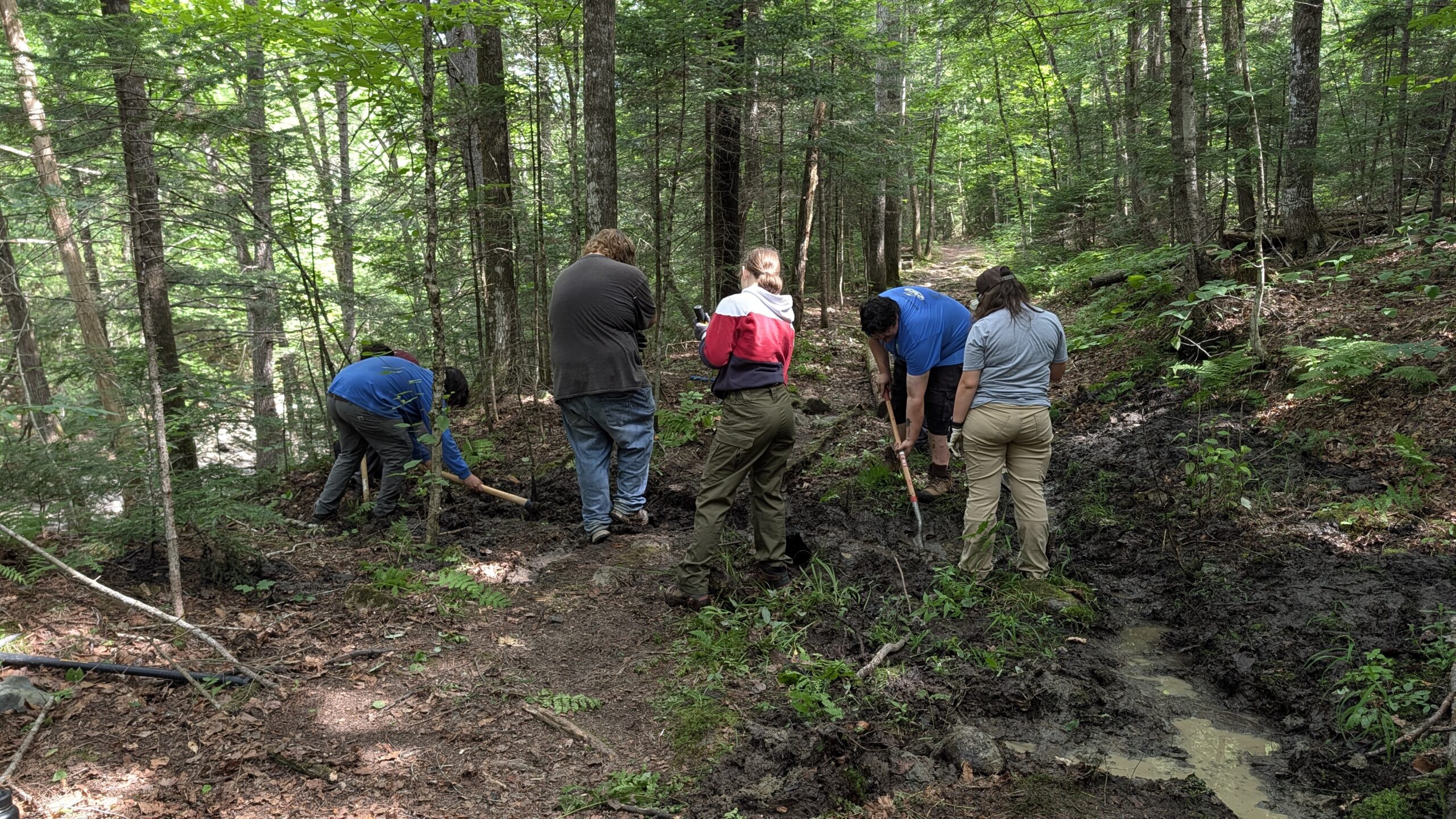
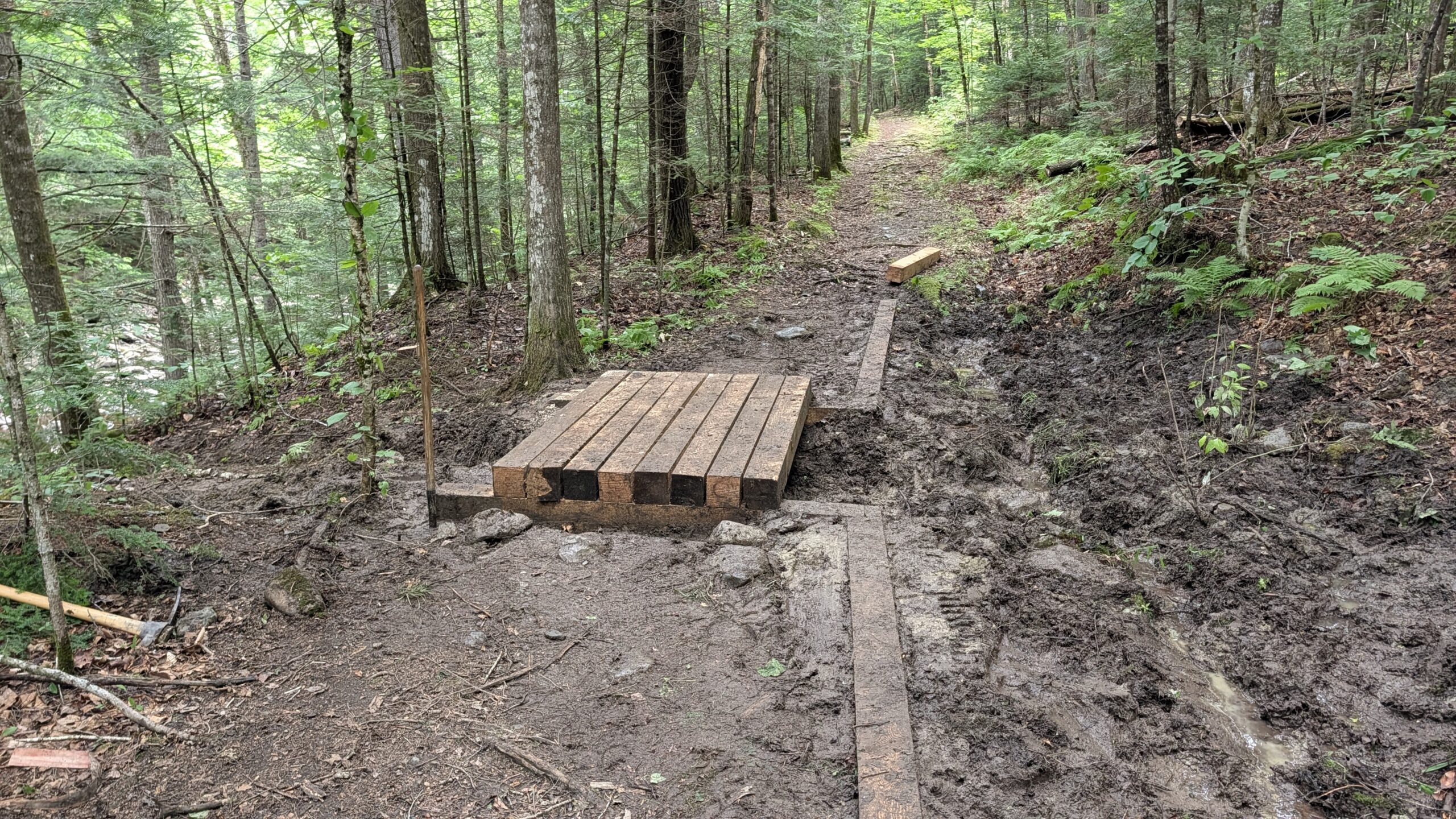
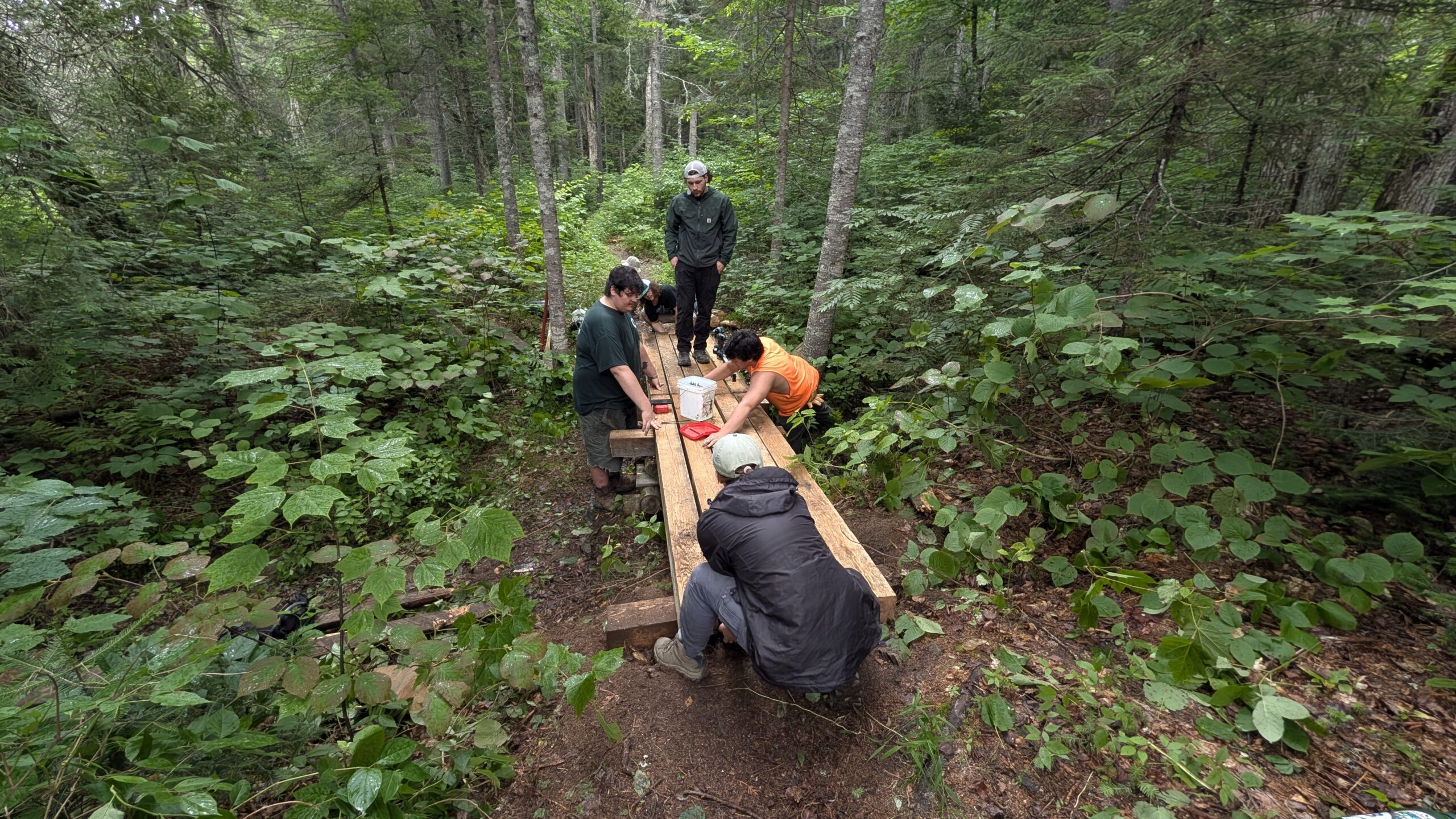
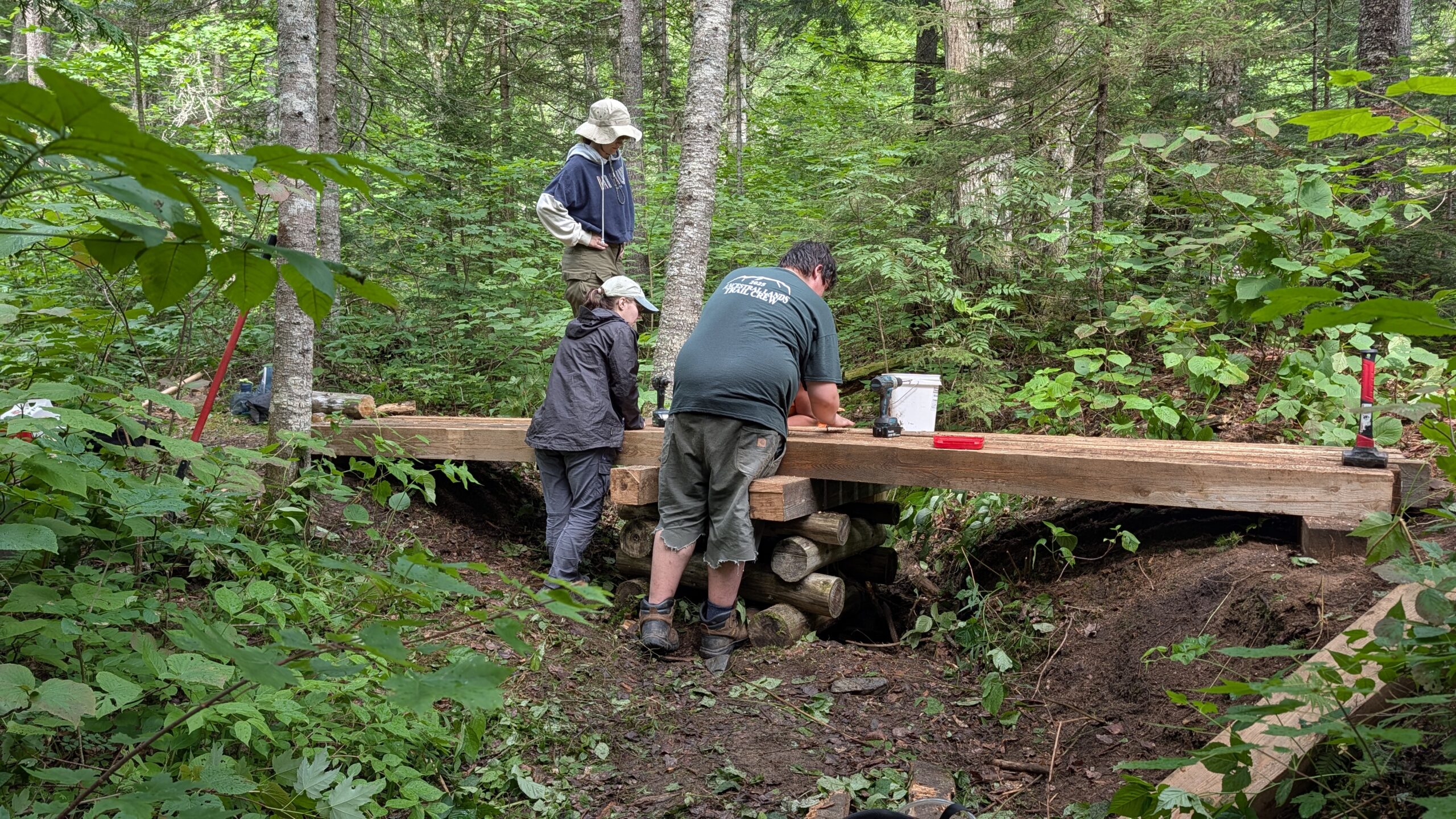
The week began with introductions and a chainsaw demonstration from MH&T Director of Operations Seth Page before the crews got to work. They started by clearing the Larry Trail corridor from Poplar Stream Trail to South Brook Falls and tackling a reroute around a chronically wet, poorly drained stretch of trail. From there, the focus shifted to bridge building. Over the next three days, the crews hauled lumber, removed old structures, and constructed three new bridges, including a 16-foot span near the waterfall, their longest haul and longest build of the week, and a 12-foot span at the trail’s midpoint. Along the way, they also improved drainage at one bridge site and reused salvaged cribbing to keep the work efficient and sustainable.
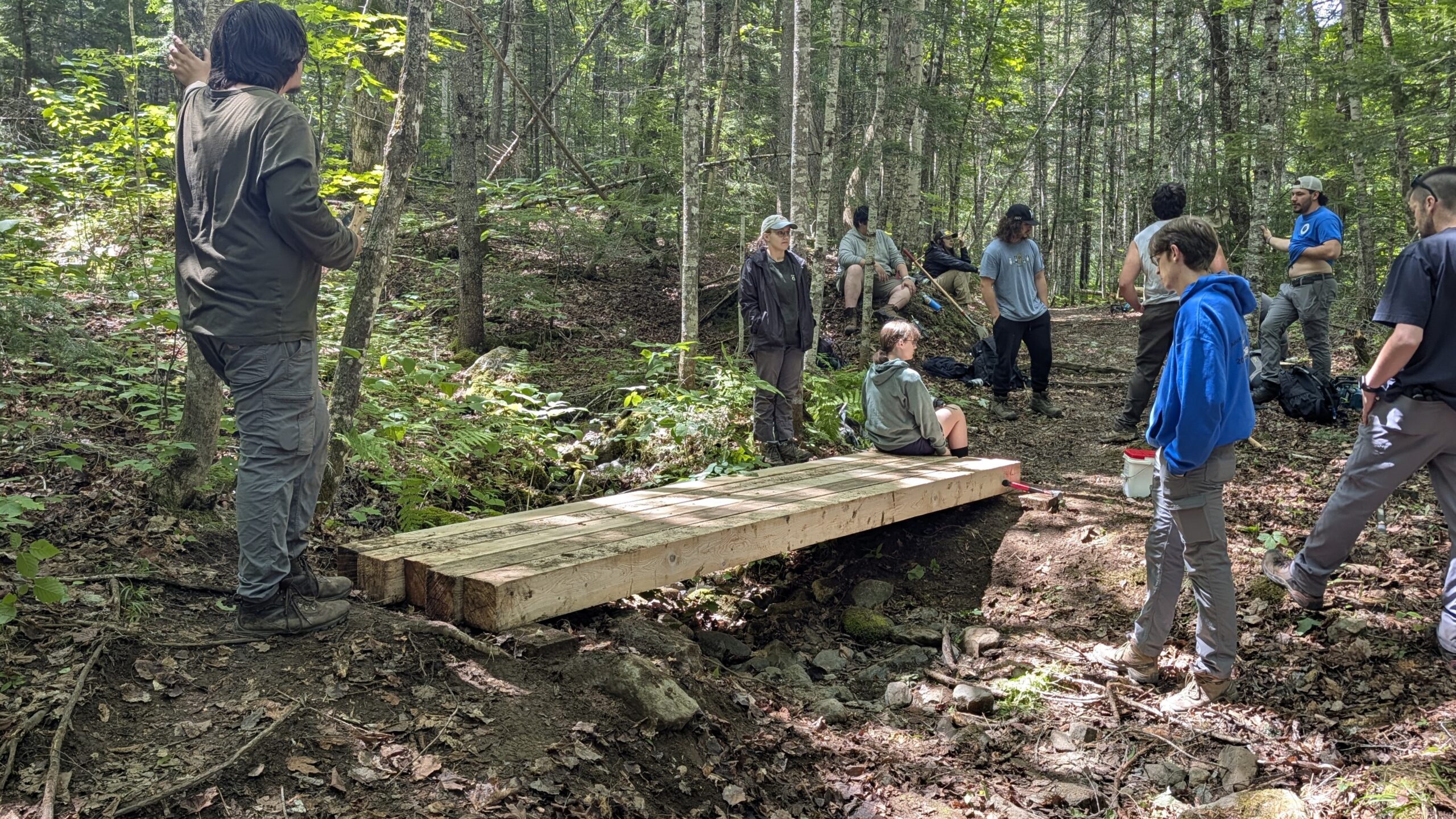
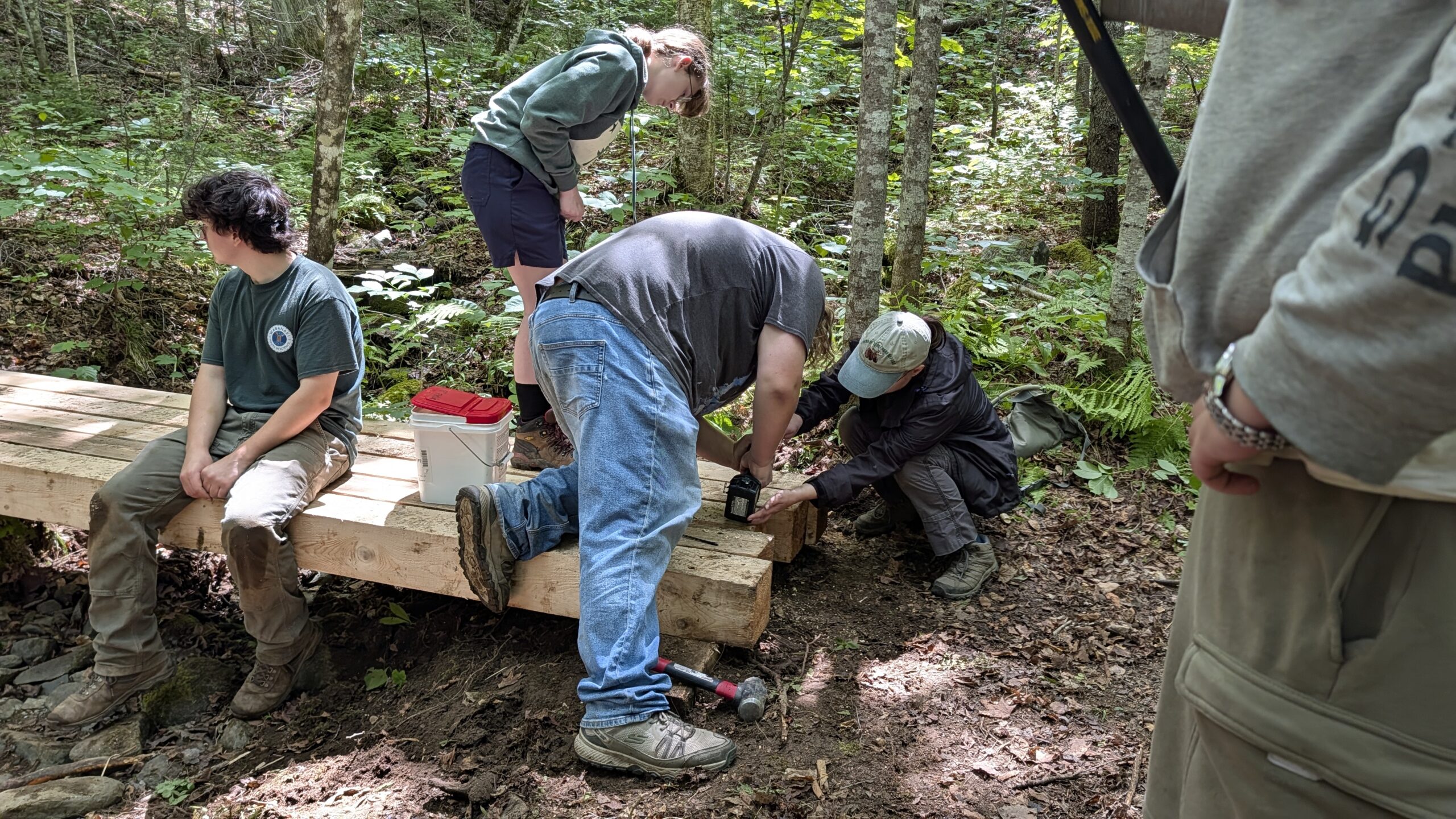
By the end of the week, the FSYC and WaYS crews had built three new bridges, rerouted a troublesome wet section, and sharpened their skills in trail bridge construction. Just as importantly, they strengthened their teamwork and spent a week connecting with the outdoors on tribal lands in Carrabassett Valley.
As we celebrate the accomplishments of these two youth trail crews, we are reminded that our mission is more than maintaining trails. It is about connecting people to nature and to one another. We are deeply grateful to the Forest Stewards Youth Corps (FSYC), Wabanaki Youth in Science (WaYS), and our Director of Operations, Seth Page, for their dedication, hard work, and partnership in making this project a success. We also extend our sincere thanks to the USDA grant that made this important collaboration possible. Together, these efforts are helping create stronger communities, healthier public lands, and meaningful opportunities for the next generation of outdoor stewards.